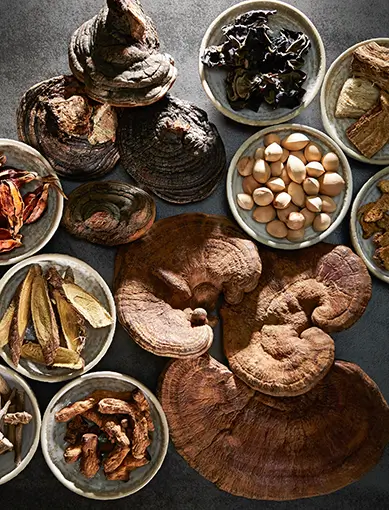
Using mycelium on wooden plugs is an extremely simple method for propagating mushrooms that naturally grow on wood. This mainly includes Shiitake, Oyster mushrooms, Reishi (Ganoderma lucidum), Winter mushrooms, Poplar mushrooms, Lion’s Mane, Maitake, and others. These mushroom species are among the easiest to cultivate, as they require nothing more than suitable growing conditions and the appropriate tree logs for their growth.
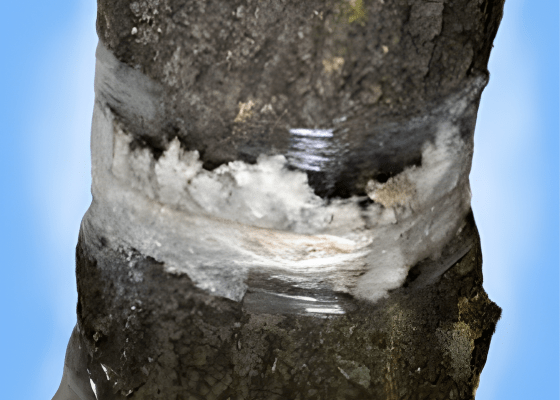
The wood must be fresh, healthy, and undamaged. Holes are drilled into the logs, into which wooden plugs inoculated with mushroom mycelium are inserted, and the logs are then placed in a shaded area of the garden. On warm days, the mycelium fully colonizes the log and draws nutrients from it. Once it has accumulated enough energy, it begins forming mushroom primordia. Mushrooms typically appear in early spring or autumn, depending on the species.
This cultivation method is suitable for growing mushrooms outdoors or in damp cellars, tunnels, or similar spaces. Logs inoculated with mycelium can easily withstand temperatures below –20 °C. Over the course of the entire cultivation cycle, one cubic meter of logs can produce approximately 60 kg of mushrooms.
Mushrooms growing on harder wood species (such as oak), especially larger-diameter logs, can continue to fruit annually for up to 10 years.
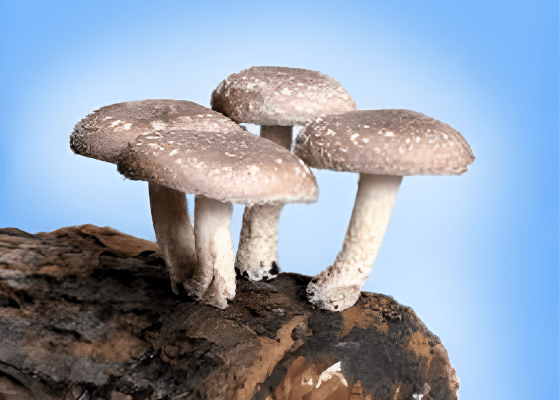
Cultivation of Lentinula edodes (Shiitake) on Wood
Mushroom mycelium can be inoculated into logs using wooden plugs already colonized with mycelium or using mycelium grown on cereal grains. When using grain-based mycelium, shorter and thicker logs are selected, up to 30 cm in diameter and no more than half a meter in length. A few months after inoculation, a white layer of mycelium appears on the cut end of the log, which gradually turns brown and hardens. For such logs, fruiting can be stimulated by soaking them in cold water for 24 hours. Mushroom production can also be encouraged by striking the colonized logs after they have been soaked for 24 hours. Striking should be done on the cut ends, not the bark, as the bark acts as a protective layer that must not be damaged.
The table below allows you to determine the suitability of various wood species for shiitake cultivation.
Table 1. Suitability of Wood for Shiitake (Lentinula edodes) Cultivation
|
Latin Name of the Tree |
English name od the Tree |
Cultivation suitability |
|
Acer sp. |
Maple |
2 |
|
Alnus sp. |
Alder |
3 |
|
Betula sp. |
Birch |
3 |
|
Carpinus sp. |
Hornbeam |
4 |
|
Castanea sp. |
Chestnut |
3 – 4 |
|
Malus silvestis |
Apple |
0 |
|
Populus sp. |
Poplar |
1 |
|
Fagus sylvestris |
Beech |
4 |
|
Quercus sp. |
Oak |
4 |
|
Salix sp. |
Willow |
3 |
|
Liriodendron tulipifera |
Tulip tree |
1 |
|
Platanus occidentalis |
Plane tree |
1 |
|
|
conifers |
not suitable! |
Suitability of Wood for Shiitake Cultivation: very poor – 0, poor – 1, good – 3, excellent – 4
Table 2. Growing Conditions for Shiitake (Lentinula edodes)
| Substrate Colonization | |
| Temperature | optimal 21 – 27oC, slower at lower temperatures |
| Light | not necessary |
| Time | 6 – 24 months, depends on temperature and wood type |
| Mushroom Primordia Formation | |
| Temperature | 8 – 21oC |
| Air humidity | 95 – 100 % |
| Time | 5 – 7 days |
| Light | low light needed |
| Mushroom development | |
| Temperature | 16 – 27oC, depends on strains |
| Air humidity | 60 – 80 % |
| Growth time | 5 – 8 dni |
| Light | low light needed |
Cultivation of Ostreatus pleurotus (Oyster Mushroom) on Wood
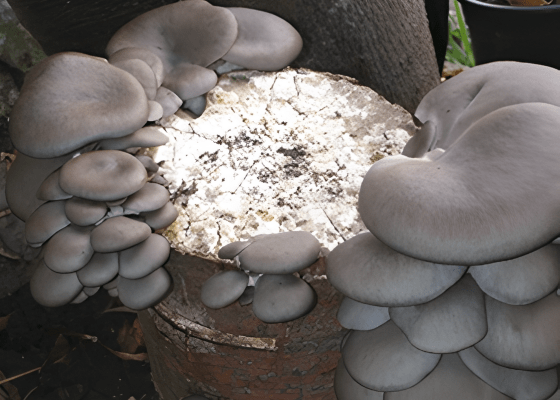
Oyster mushrooms can be inoculated into logs using wooden plugs already colonized with mycelium or with mycelium grown on cereal grains. Fruiting can be expected as early as autumn if the logs were inoculated with mycelium in early spring and kept outdoors in a warm, shaded location. Mushrooms begin to emerge from the wood when temperatures drop and rainfall becomes more frequent, typically in autumn. Outdoor cultivation is the most successful, as the mycelium has access to fresh air and sufficient moisture for mushroom development.
The cultivation process on straw is faster and widely used in commercial production. Substrate colonization occurs at optimal temperatures within two to three weeks, after which mushroom primordia begin to form. From the same substrate, three flushes can typically be expected at intervals of one to two weeks.
Growing Conditions for Oyster mushroom (Pleurotus ostreatus)
| Substrate Colonization | |
| Temperature | optimal 20-24oC, slower at lower temperatures |
| Light | not necessary |
| Time | 6 – 10 months on wood 14 – 21 days on grains |
| Mushroom Primordia Formation | |
| Temperature | 8 – 15oC |
| Air humidity | 95 – 100 % |
| Time | 3 – 5 days |
| Light | low light needed |
| Mushroom development | |
| Temperature | 10 – 21oC depends on strains |
| Air humidity | 85 – 90 % |
| Growth time | 4 – 7 dni |
| Light | low light neede |
For cultivation, beech, hornbeam, birch, and poplar are recommended. Oak and coniferous woods generally do not support mycelium growth.